Business Application Modernization
Modernize critical applications in manageable stages.
Modernize the applications your business depends on. We lead architecture and engineering through a staged transition, keeping business operations, cutover, and support in view.
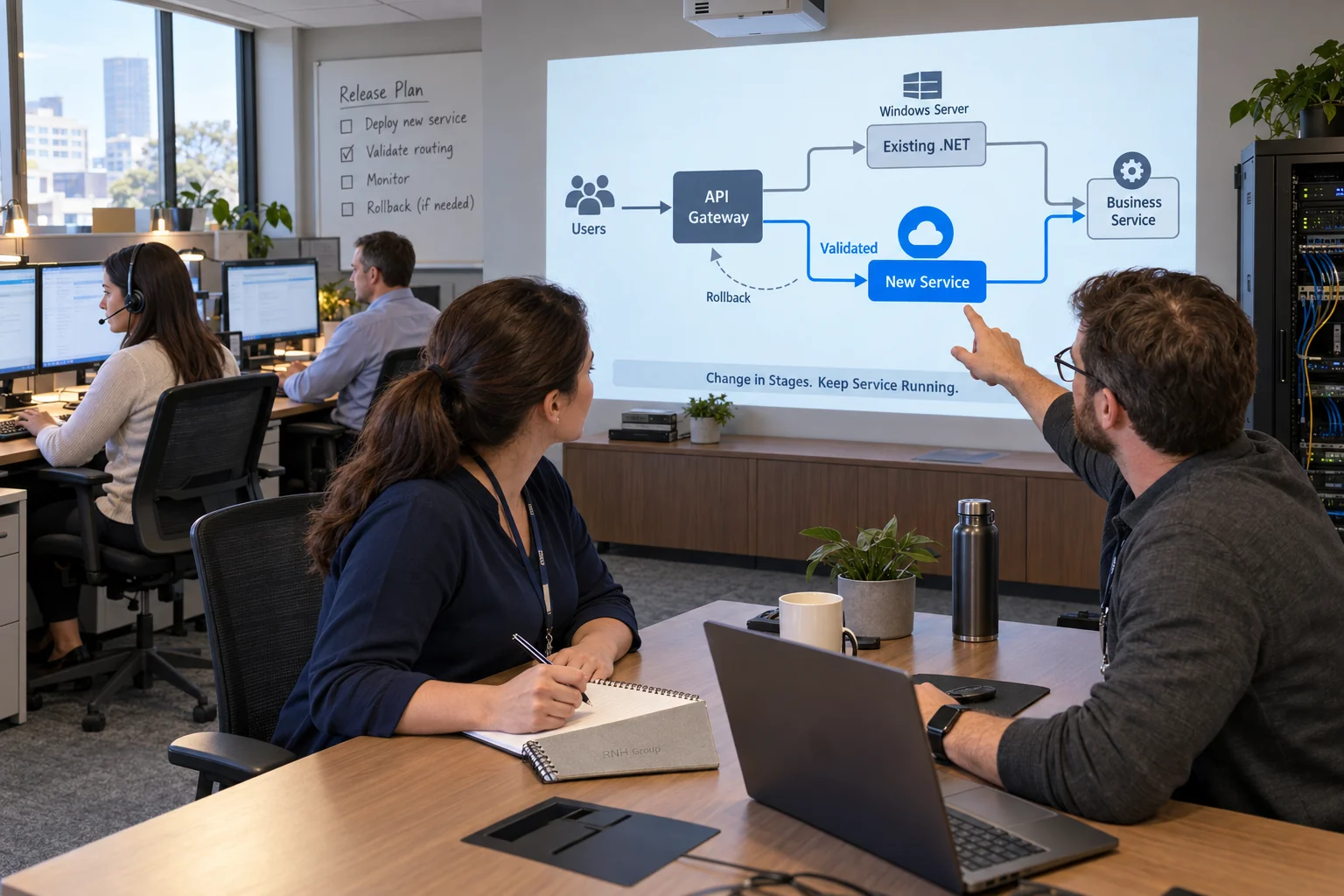
Application modernization

Modernize in stages. Keep the business moving.
When to bring us in
- A critical application depends on aging or unsupported technology.
- Maintenance is consuming effort that should go into business improvements.
- You need a transition plan that accounts for ongoing operations.
Inside the engagement
Cutover is a business decision, backed by evidence.
Modernization must account for the capabilities that keep the business running. Agree coexistence, rollback, and operational responsibility before retiring the existing application.
Example · Moving an order-management capability
- 01
Start coexistence
Accountable role: Architecture and system owners
Evidence requiredInterface contracts and data ownership agreed
- 02
Move the capability
Accountable role: Delivery and business owners
Evidence requiredReconciliation, user acceptance, and rollback verified
- 03
Retire the legacy path
Accountable role: Operational owner and sponsor
Evidence requiredRemaining dependencies removed and support ready
The engagement
What you receive
Architecture
01Application assessment and target design
Dependencies, risks, and a practical design for the capabilities in scope.
Migration
02Phased implementation
Modernized capabilities delivered in a sequence agreed with business and technical owners.
Transition to operations
03Cutover and handover plan
Validation, rollback considerations, retirement criteria, and operational ownership.
Engagement format. Phased implementation or delivery leadership, with scope and acceptance agreed for each stage.
How the work connects
Move one capability at a time
Working together
Clear steps.
Clear responsibilities.
We lead the engagement from architecture through implementation. The delivery team and specialist capabilities are assembled around the scope, with responsibilities and acceptance criteria agreed before work begins. Your teams and partners can deliver defined workstreams within that structure.
- 01
Understand the dependencies
Review the application, business processes, and interfaces.
- 02
Deliver in stages
Implement and validate capabilities while managing coexistence.
- 03
Cut over and hand over
Confirm readiness, transition operations, and retire agreed legacy components.
Experience behind the approach
Our perspective
Our insights examine the decisions that shape technology investment and delivery. Read the thinking behind our approach, then explore the relevant project experience below.
When Modernization Loses Momentum (And How to Reset It)About RNHCG →Before we begin
Can you work with our existing team?
Yes. We agree which workstreams we, your teams, and any implementation partners will own. We define staffing, technical authority, acceptance, and handover before work starts. Your business sponsor retains investment and operational decisions.
Does modernization mean rewriting everything?
No. Scope may involve targeted changes, replacement of selected capabilities, or a wider transition. The assessment establishes what is appropriate.
Relevant case studies
Experience behind the work.
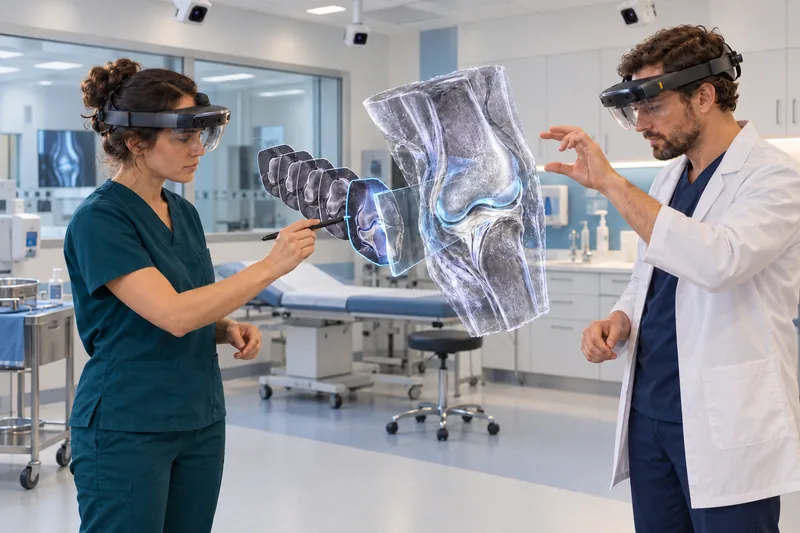 Medical Technology / Life Sciences
Transforming Medical Imaging Into AR- and CAD-Ready Digital Experiences
A medical-imaging platform transforms DICOM studies into reusable 3D assets for AR, CAD, cloud, and mobile experiences.
Read case study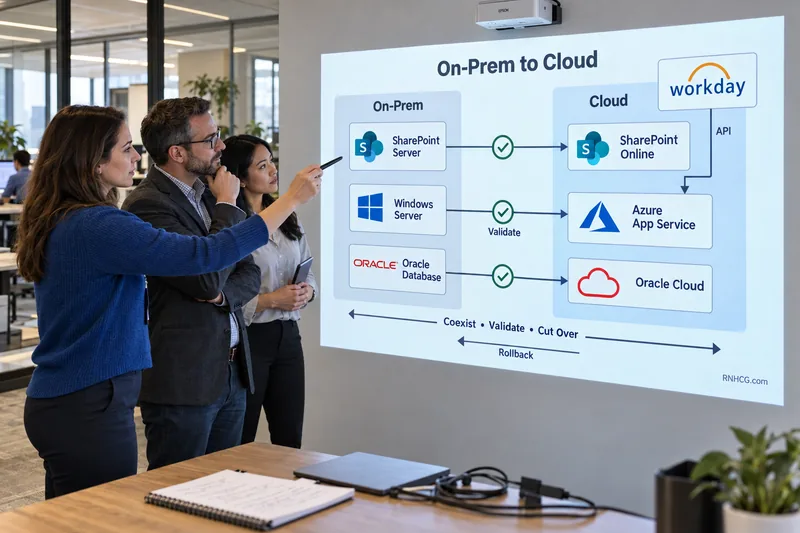 Professional Services
Modernizing a Mission-Critical Legacy Platform
Incremental modernization keeps essential operations running while a tightly connected legacy platform evolves.
Read case studyStart a conversation
Move your initiative forward.
Talk with us about the decision or delivery challenge in front of you. We will identify where we can help and the next step.
Choose a time to talk or send a brief description of your initiative.